Ramp or Stairs? Your Old Dog's Joints Have a Vote
Every senior dog eventually faces the same piece of furniture: the bed or sofa they have jumped onto ten thousand times, now suddenly a wall. The fix is a ramp or a set of stairs — and the two are not interchangeable. A ramp replaces the jump with a slope; stairs replace it with smaller jumps. Which one your dog needs depends on their joints, their size, and how high the furniture actually is. Here is the decision, with the three products in our catalog that cover it.
The short version: arthritic or post-surgery dogs get a ramp (the PawRamp, $154.99); small, steady dogs who still handle steps get stairs (the Easy Step II, $42.99) — and the furniture's height makes the final call.
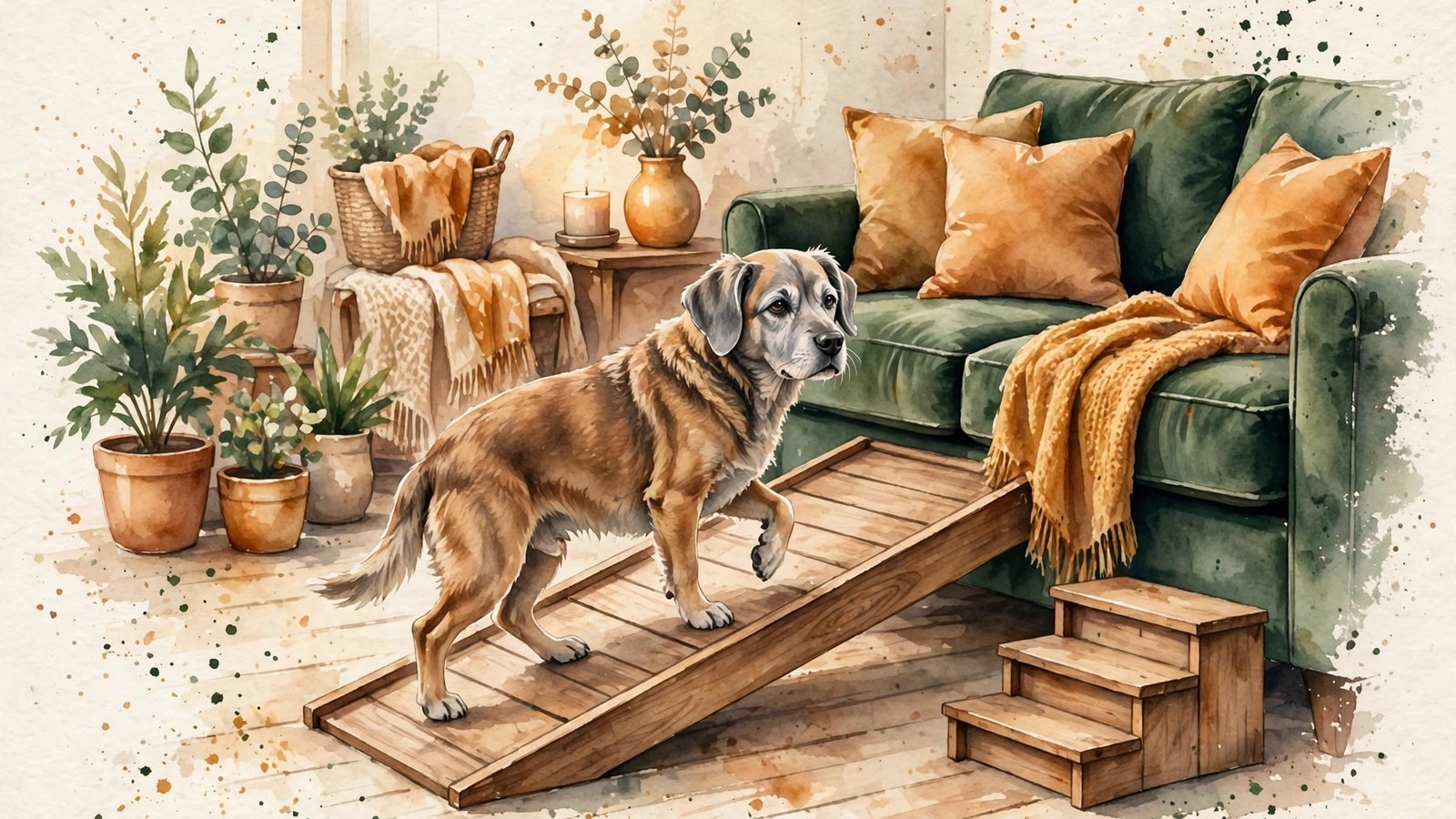
The geometry, briefly
A ramp asks a dog to walk up one continuous, gentle incline. Effort is spread evenly, no single step loads the joints hard, and the dog comes down the same way it went up — important, because jumping down is where a lot of the impact lands. Stairs break the same climb into steps. Each step is far kinder than the full jump, but it is still a small jump, up and down, and the dog has to judge and land on each tread. Slope numbers tell the story for the ramps below: the CozyUp rises 25 inches over a 70-inch length, a gentle grade; the PawRamp adjusts its angle by height setting. Stairs, by contrast, concentrate the climb — the Easy Step II reaches about 13 inches in two steps.
The picks
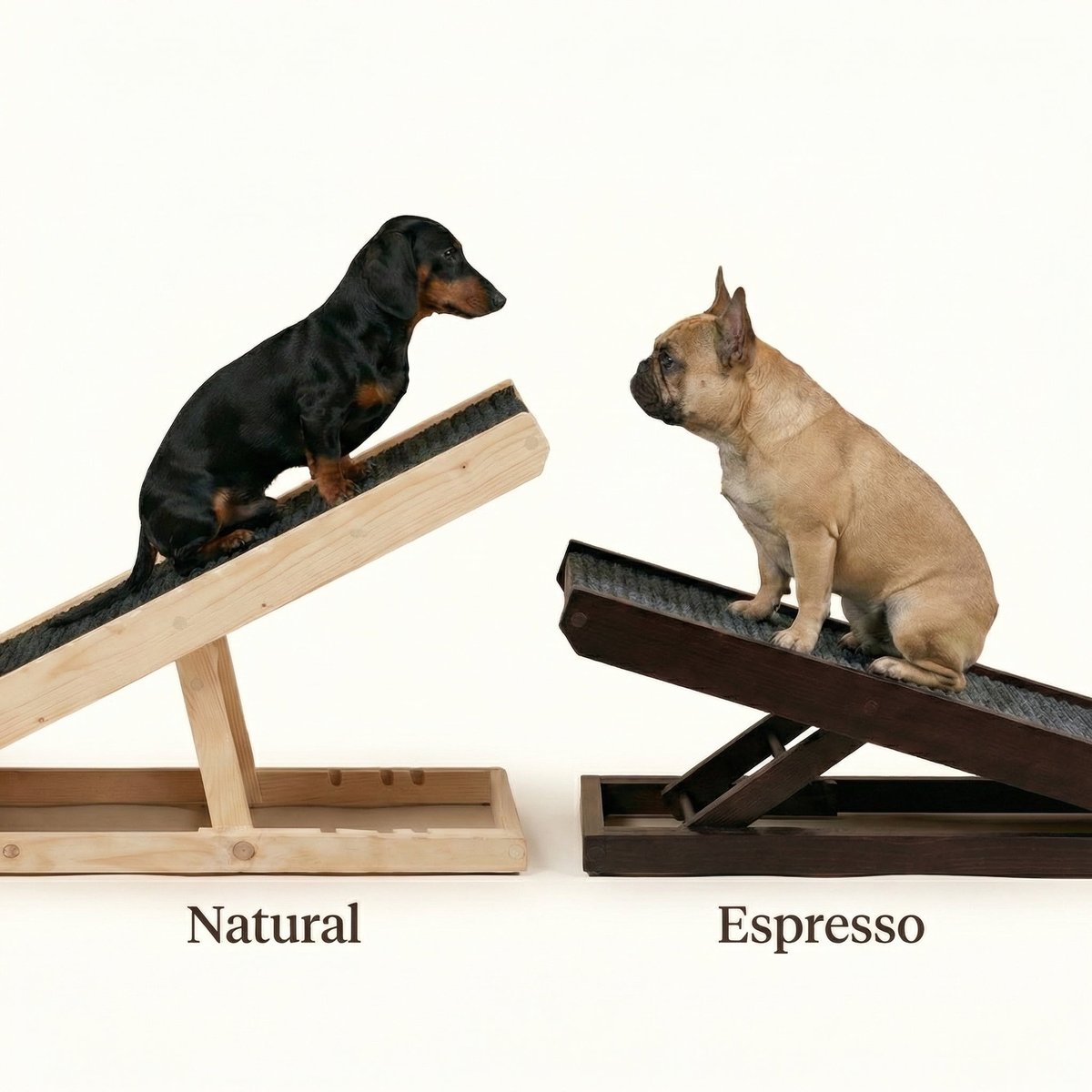
PawRamp
$154.99
The adjustable ramp. Four height settings — 12, 16, 20 and 24 in — let one ramp serve a sofa now and a bed later, the solid Finnish pine frame has a full-length no-slip carpet surface, and it folds flat to 3.5 in for storage and arrives assembled.
The catch: Rated to 80 lb, so it is not the answer for giant breeds — and its promo pricing fluctuates heavily, so the sale price is the real street price.
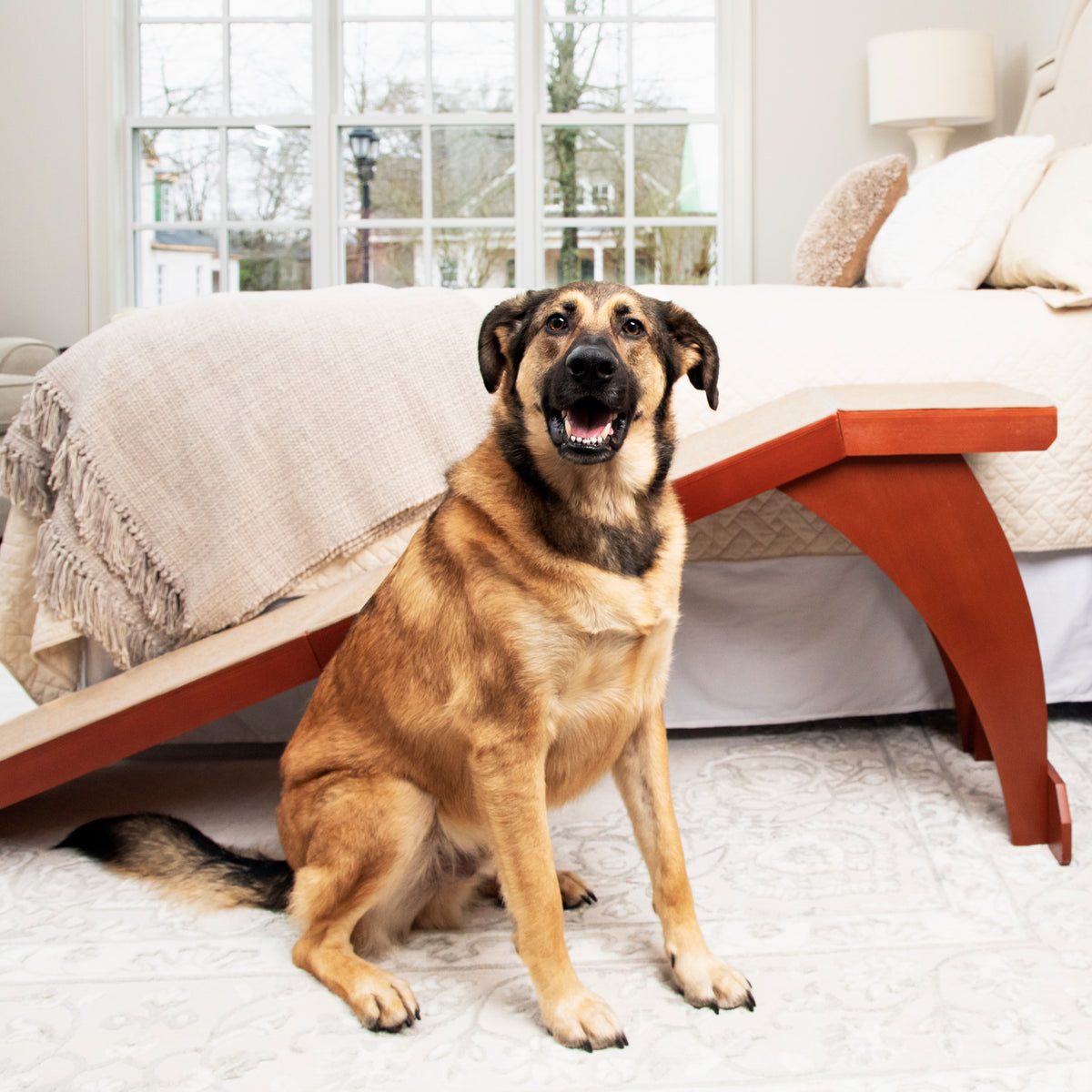
CozyUp Bed Ramp
$159.99
The long, gentle fixed ramp. Seventy inches of wood ramp supporting up to 120 lb, with a heavy-duty carpet surface for grip — the length is the point, because it keeps the incline shallow on the way to a high bed.
The catch: That 70 x 16 in footprint needs real floor space, permanently, and assembly is required.
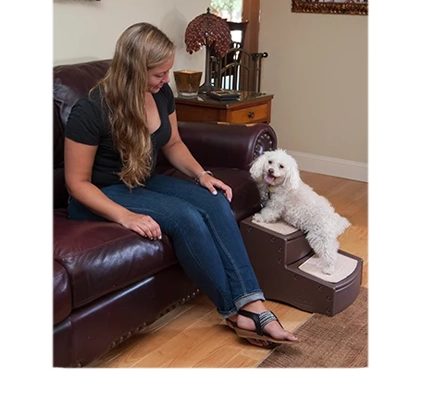
Easy Step II Pet Stairs
$42.99
The stairs option, and the budget pick by a wide margin. Wide, deep steps with a gentler-than-usual incline, snap-together assembly with no tools, and removable carpet treads you can machine-wash.
The catch: Plastic construction feels less premium than the wooden ramps, and the two-step height (about 13 in) suits sofas — it will not get a dog onto a high bed.
When the ramp wins
For most dogs whose joints are the reason you are shopping, the ramp is the safer default — and it is the option many vets suggest for dogs with arthritis, hip problems or back conditions such as IVDD, because a continuous slope avoids repeated impact altogether. Ramps also scale better: a big dog is heavy work on stairs, and the CozyUp above is rated to 120 lb. If your dog is post-surgery, unsteady, or already hesitating at steps, start with a ramp and do not negotiate. One hedge, honestly stated: no ramp or stair treats anything. These are access tools that reduce strain; a dog that is suddenly struggling to climb deserves a vet visit, not just new furniture.
When stairs are fine
Stairs earn their place for small dogs who are still mobile and confident — a healthy 15 lb dog climbing two carpeted steps to a sofa is doing nothing its joints cannot handle, and it is doing it for $42.99 in a footprint a fraction of a 70-inch ramp’s. Stairs are also the pragmatic pick where floor space is tight or the furniture is low. The honest dividing line is not size alone but trajectory: stairs for a dog whose joints are fine today, a ramp for a dog whose joints are the conversation.
Height matching and the training week
Whichever you choose, measure first: the top of the ramp or the top step should land close to the height of the surface the dog is aiming for — a ramp that stops six inches short just relocates the jump. The PawRamp’s four settings exist precisely because beds and sofas differ. And budget patience either way: some dogs march up a new ramp the first evening, and many need several days of treats, a leash guide and zero forcing before they trust it. A ramp a dog will not use helps no one’s joints.
The verdict
Joints already a concern, or a bigger dog: the ramp — the PawRamp for adjustability and easy storage, the CozyUp for large dogs and high beds. Small, spry dog and a low sofa: the Easy Step II, and keep the change. The two ramps go head-to-head in our PawRamp vs CozyUp comparison, and both sit alongside the beds in our senior pet comfort collection.
Winter makes stiff joints stiffer — our senior dog cold-weather guide covers the home fixes that help, from traction to bedding.
Common questions
Are ramps or stairs better for a dog with arthritis?
Generally the ramp. Many vets suggest ramps for dogs with arthritis or back problems because a continuous gentle slope avoids the repeated small impacts of steps. Stairs are fine for dogs whose joints are still healthy — they replace one big jump with several smaller ones.
What height ramp does my dog need for a bed?
Measure the top of the mattress and match it: the ramp's high end should land close to that height. The PawRamp adjusts between 12 and 24 in, and the CozyUp's fixed length reaches beds around 25 in high. A ramp that stops well short of the surface just moves the jump.
How long does it take a dog to learn to use a ramp?
Plan on days, not minutes. Some dogs take to it immediately; many need several short, treat-led sessions and should never be forced or lifted onto it halfway. Carpeted, no-slip surfaces (both ramps here have them) make the learning considerably easier.