Wet Food Can't Sit Out All Day. These Feeders Fix That
Dry food forgives. Leave kibble in a bowl for a day and it is stale; leave wet food out for an afternoon and it is a bacteria farm with a crust on it. The standard food-safety guidance for opened wet food is roughly two hours at room temperature — which makes the classic automatic feeder, a hopper that drops food into an open bowl, useless for the way millions of cats actually eat. Two feeders in our catalog attack that problem from opposite directions: refrigerate the food, or seal it away from air and other pets.
The two: the PETLIBRO Polar ($169.99), which refrigerates wet food below 50°F for up to 72 hours, and the SureFeed Microchip Pet Feeder Connect ($179.99), which skips refrigeration and instead seals a fresh bowl behind your pet's microchip.
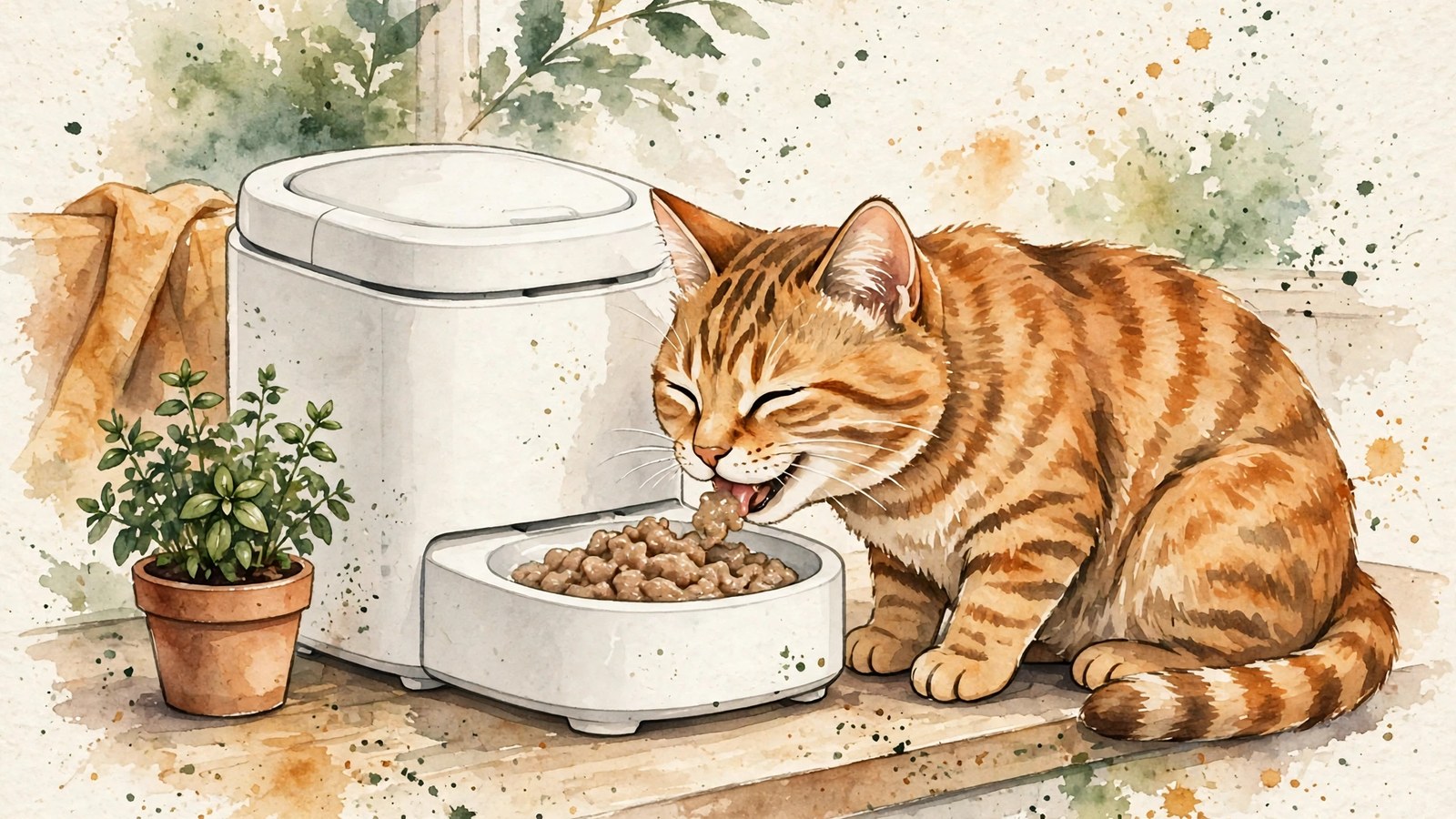
Why your dry-food feeder cannot do this job
A dry feeder like the PETLIBRO Granary keeps food fresh by storing it sealed in a hopper and dropping a portion at mealtime — a design that only works because kibble tolerates air. Wet food starts in a can or pouch, not a hopper, and the moment a portion is served the clock starts. No hopper design fixes that; the food itself has to be kept cold or kept sealed. So the wet-food category splits into machines that refrigerate and machines that seal — and one honest budget route, covered below, that does a little of the first with ice.
The picks
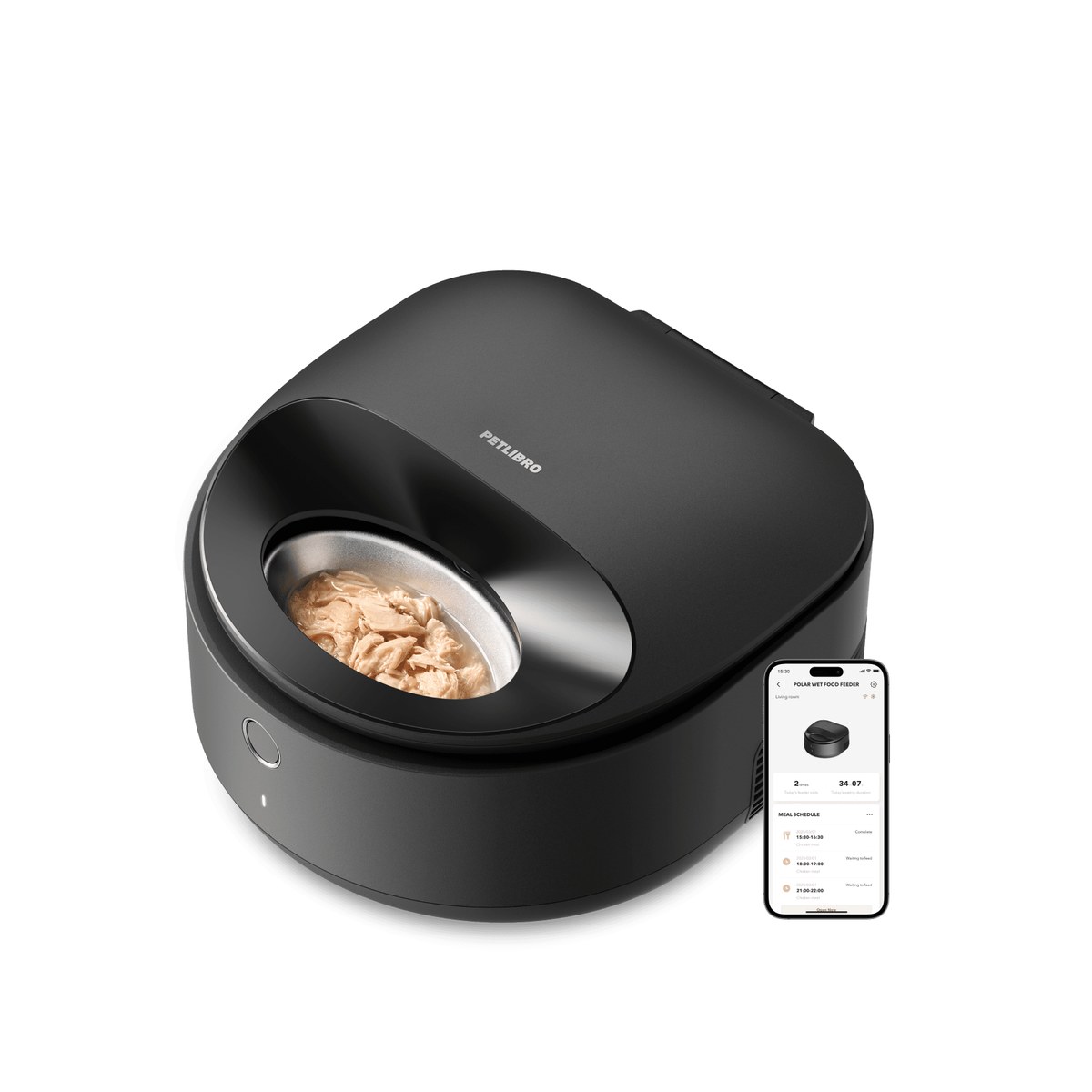
Polar Smart Wet Food Feeder
$169.99
The refrigeration answer. Semiconductor cooling — the same tech as a travel cooler, no ice packs — keeps three wet-food meals chilled below 50°F and fresh for up to 3 days (72 hours), per PETLIBRO. About 30 minutes before each meal the cooling pauses so the portion comes up toward room temperature instead of fridge-cold. Scheduling and a Feed Now button run from the app, and the stainless steel bowl is dishwasher-safe.
The catch: Only three meals per load, and the 7.7 in bowl height means your cat needs a shoulder height of at least about 6.1 in at the opening — small kittens may struggle. It needs mains power and Wi-Fi, and works best in rooms under 86°F.
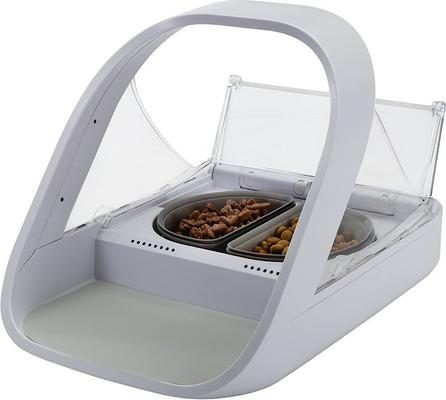
SureFeed Microchip Pet Feeder Connect
$179.99
The sealing answer. The lid closes onto a neoprene-sealed bowl that locks in moisture and keeps flies out, so a serving of wet food stays appetizing far longer than in an open bowl. The feeder opens only for the registered pet’s microchip or RFID tag — which makes it the prescription-diet and food-thief solution as much as a freshness one — and built-in scales log how much your pet actually ate, and when.
The catch: There is no refrigeration and no timer: sealing buys hours of freshness, not days, and the feeder is access control, not a dispenser. The app features need the Sure Petcare Hub (sold separately, around $84), and it runs on 4 C batteries that are not included.
Refrigeration vs sealing: which problem do you have?
Your problem is time — long workdays, weekends away, a cat that eats on a schedule you cannot keep. That is the Polar. Three meals held at fridge temperature for up to 72 hours covers a long weekend of wet-food feeding, which no sealed bowl can honestly promise.
Your problem is other pets — one cat on a prescription diet, another who steals, a dog who hoovers. That is the SureFeed Connect. The microchip lock is the feature; the seal keeping the food fresh between the right cat’s visits is the bonus. Its portion logs also give you something the Polar does not: a record of appetite changes, which is often the first sign a cat is unwell.
Your problem is one missed meal. Then the budget route deserves an honest mention: simple timer feeders chilled by ice packs. Load one in the morning and the ice keeps a serving cool for several hours — enough for a late evening at work, not enough for a weekend, and the ice pack is one more thing to remember to freeze. We do not carry one in the catalog, but for the single-meal case it solves the problem for a fraction of either pick above.
The verdict
Buy the Polar if wet food has to wait hours or days for your cat. Buy the SureFeed Connect if the right food has to reach the right cat and stay fresh between visits. Both appear in our full automatic feeders guide alongside the dry-food machines they complement — many wet-food households end up running one of each kind.
Working long or rotating shifts? Automatic feeders for long shifts ranks feeders by hopper size and backup power — and for dry food, the Granary vs PetSafe Smart Feed comparison is the head-to-head that matters.
Common questions
How long can wet food sit out for a cat?
The standard food-safety guidance is about two hours at room temperature for opened wet food. That is the whole reason this category exists — a normal open bowl cannot cover a workday, let alone a weekend.
Does the SureFeed Connect refrigerate food?
No. It seals the bowl with a neoprene lip that locks in moisture and keeps flies out, which keeps a serving fresh for hours. For food that must wait days, you need actual refrigeration — that is the Polar's semiconductor cooling, rated by PETLIBRO to keep meals fresh for up to 72 hours.
How many meals does the Polar hold?
Three — one tray of three portions, each up to about 7.4 oz. That is up to 3 days of once-a-day wet feeding, or a day and a half at two meals a day, before it needs reloading and a wash.